
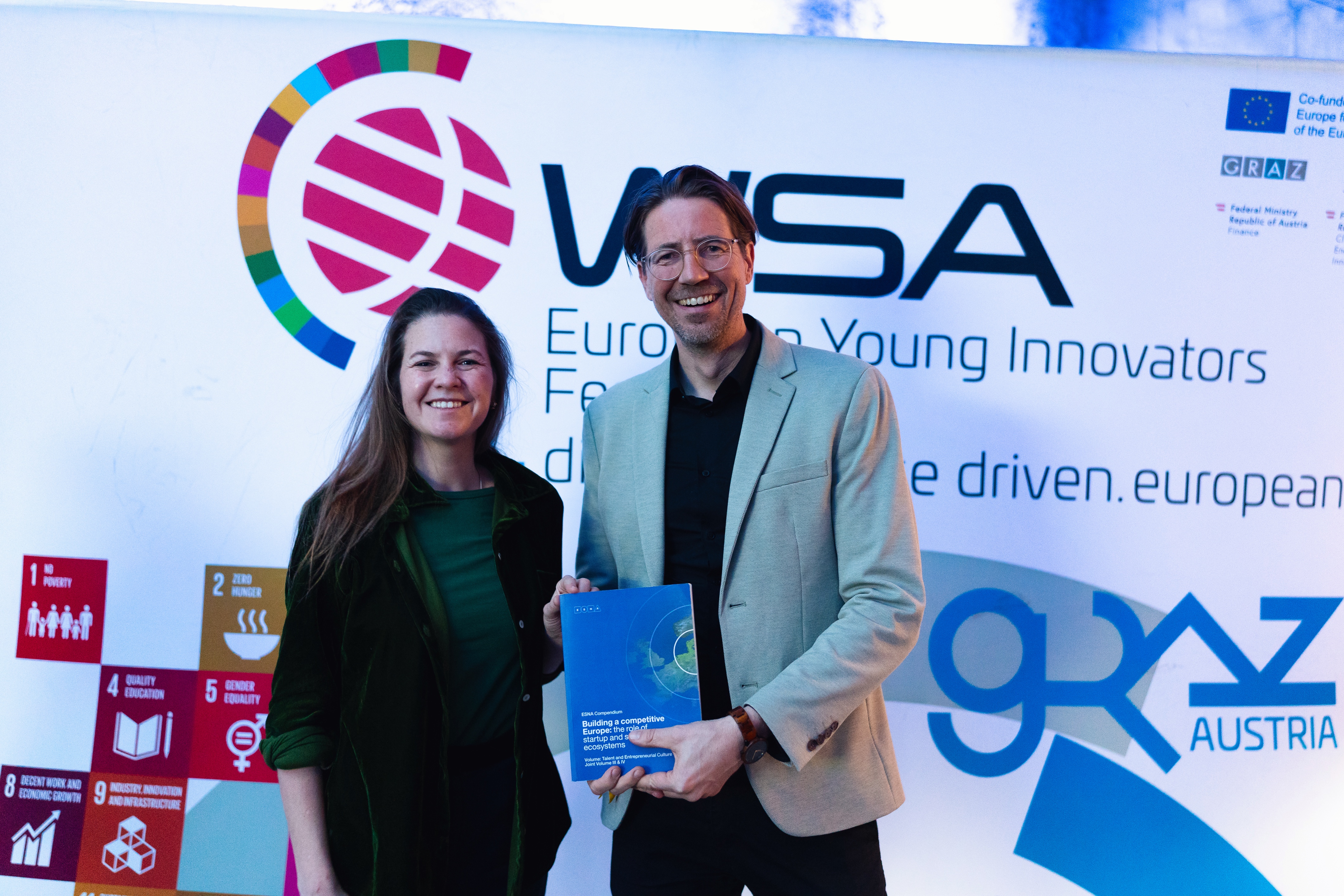
GEM data continues to inform European startup and scaleup policymaking! The latest example of this comes from the Europe Startup Nations Alliance (ESNA) Compendium: Building a Competitive Europe – The Role of Startup and Scaleup Ecosystems.
This joint volume offers practical guidelines for strengthening Europe’s startup-friendly framework conditions, aligning closely with the EU’s Startup and Scaleup Strategy. The document was developed by ESNA's Network & Strategic Initiatives Department, and co-authored by Carolina Rossi and Marine Desoche. It combines two of ESNA Compendium series' key topics: talent and entrepreneurial culture. Supported by a group of experts spanning academia, the public sector, entrepreneurs, and investors, this volume assesses how both topics intersect and offers practical solutions for policymakers aimed at fostering a thriving European startup ecosystem. GEM insights and data feature throughout this publication, reinforcing how the consortium’s work is contributing to evidence-based policymaking across Europe.
Five key themes are noted below.
1. Europe’s competitiveness hinges on talent and mindset.
The EU’s ability to remain globally competitive and sovereign in innovation depends on cultivating its human capital through education, training, and a strong entrepreneurial mindset that embraces risk and creativity.
2. Structural barriers are limiting startup growth.
Persistent issues such as brain drain, skills shortages (especially in AI and green tech), capital fragmentation, and a fear of failure continue to hold back Europe’s startup and scaleup potential.
3. Education and culture reforms are vital.
The volume stresses that entrepreneurial education is underrepresented in European curricula. Expanding it across all levels, from schools to universities, is key to preparing the next generation of innovators.
4. Policy coordination and best practices show the way forward.
Examples like Estonia’s digital leadership and Finland’s gaming sector demonstrate how combining supportive talent policies with an innovation-friendly culture can drive exceptional results.
5. Strategic recommendations aim to make entrepreneurship a respected and attainable path.
Proposals include fast-track visas for global talent, stock option reform, private-sector investment in talent development, and campaigns to normalise failure — all geared toward making Europe a place where innovation thrives and entrepreneurs are celebrated.
Professor Christian Friedl, head of the GEM Austria Team and a GEM Board Member, was one of the contributors to this volume. Access the publication.
Photo Credit: World Summit Awards. Access PDF designed version of this story.